
Why arts-based peacebuilding works
Communities living through war and displacement aren't waiting to be rescued. They navigate impossible tensions every day. They have leaders, networks, and a kind of trust no outsider can manufacture. What they're usually missing is the space to use what they already know: somewhere people can say what they actually need, argue priorities with their neighbours on their own terms, and make the slow shift from receiving help to owning it.
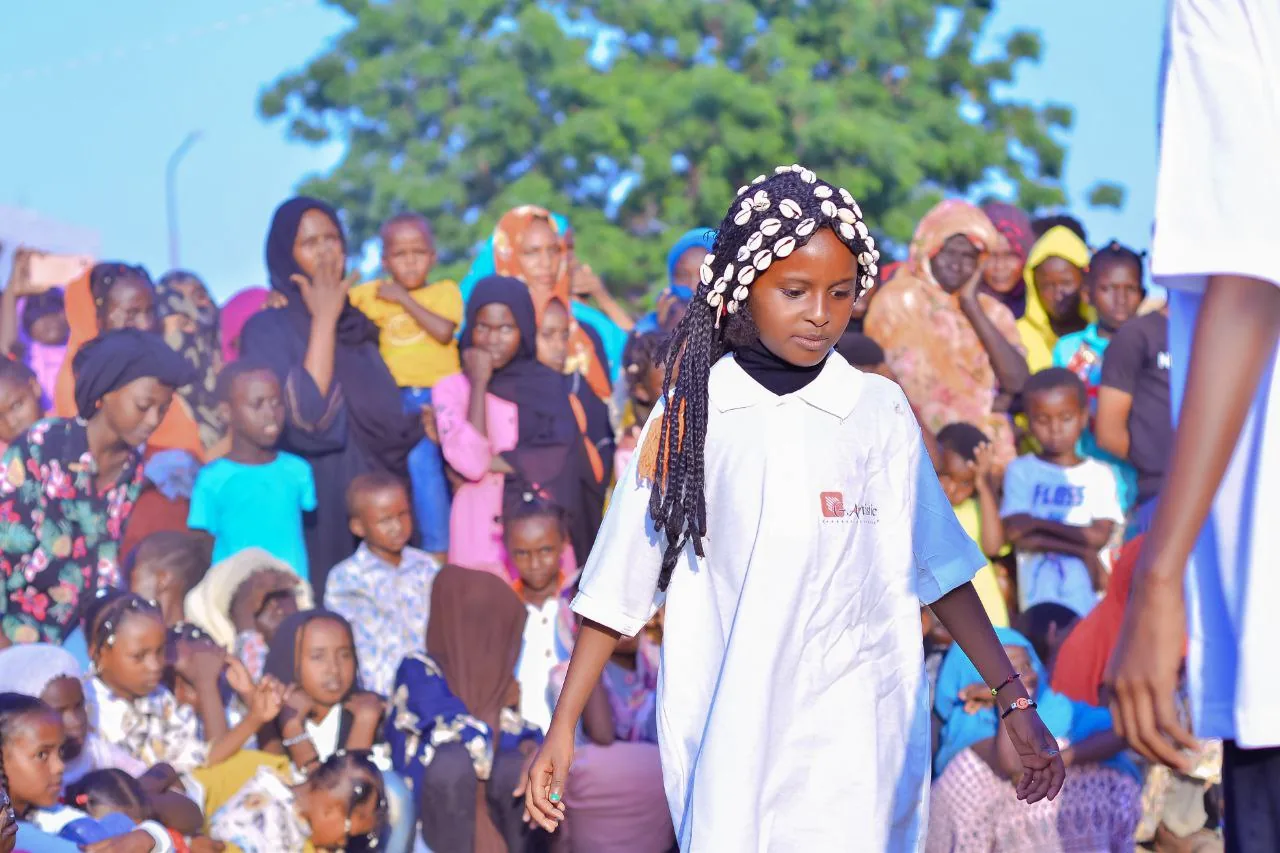
Direct confrontation over grievances tends to backfire in a high-tension setting. But a short play about a dispute at the water queue lets people name the problem without naming each other. A mural that a displaced family and a host family paint side by side does more for trust than any mediation session. Arts-based methods open that space. They invite people in rather than summon them, and they put imagination back into a process that paperwork usually drains dry.
The order is the thesis
Most of what we do follows one sequence, and the order is not negotiable. Dialogue first, because if the community isn't setting the agenda, nothing after it will hold. Capacity second, because the people who carry the work forward have to be ready. Equipment third, because tools without trained hands turn into clutter. Ownership last, when the community is running the work and we're stepping back out of the room.
We've watched what happens when projects skip the order. Equipment sits unused. Training fades inside a year. A handsome closing report gets filed, and nothing on the ground has changed. So we do it the slow way.
Dialogue
A community-led forum sets a shared agenda.
Capacity
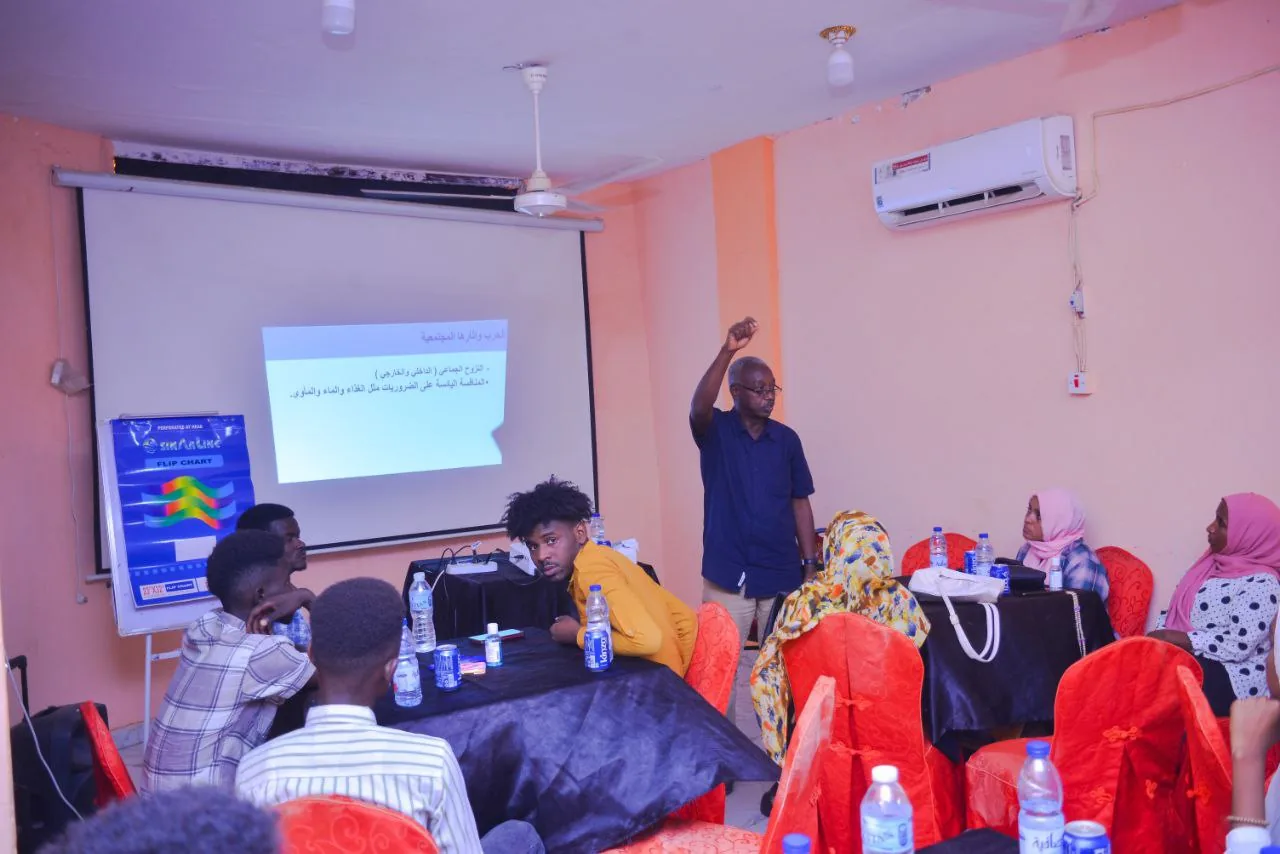
Local ambassadors are trained to carry it.
Equipment
Tools and infrastructure are handed over, after the training.
Ownership
The community runs the work itself.
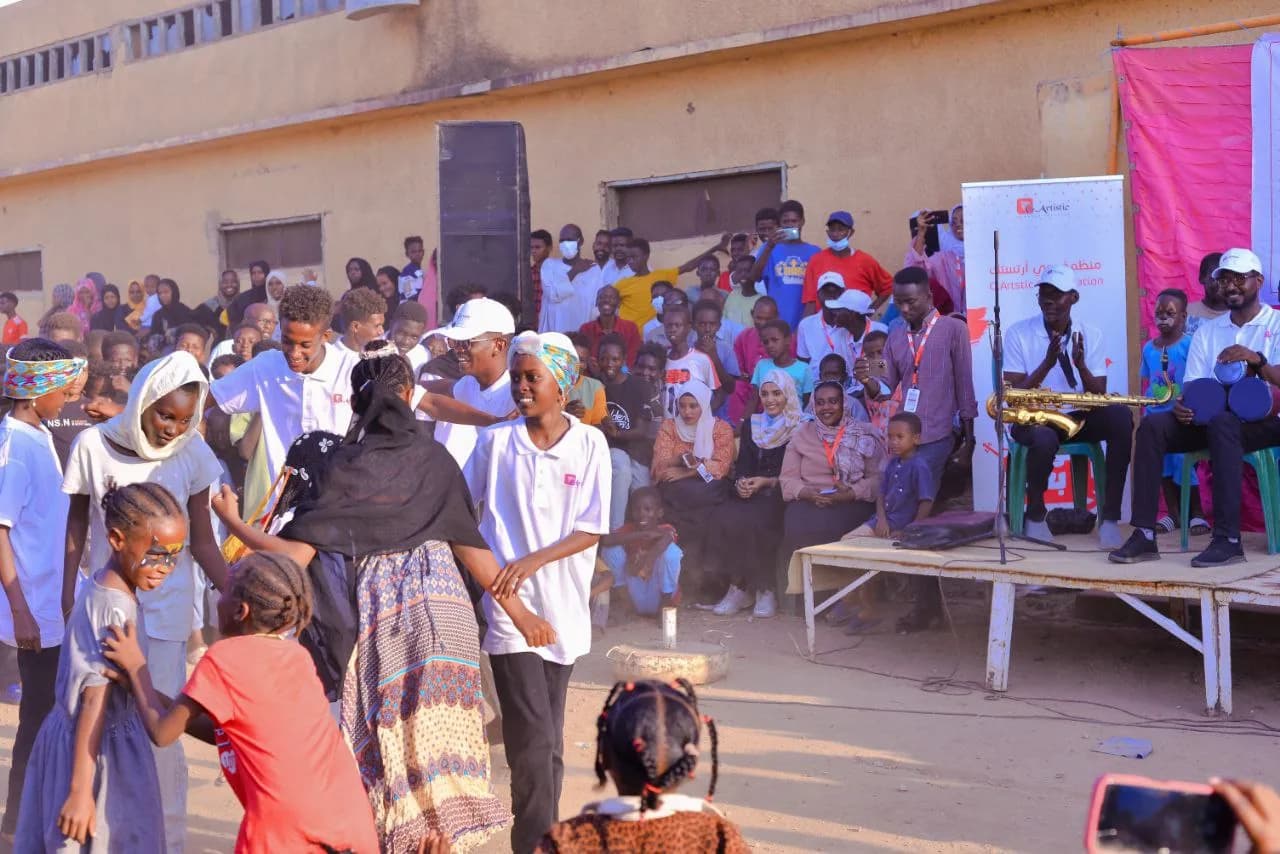
When the sequence is right, people stop receiving support and start owning it. In Al Jabarab West, that looked like a Ramadan evening of more than five hundred people, designed and run by the community itself, with no closing ceremony from us.
Seven arts, one toolkit
The seven in our name isn't a flourish. It's the range we work across: drawing and murals, calligraphy, photography, sculpture, expressive dance, music and song, and theatre. Each is a different way into the same goal, and we choose between them by reading the room first (the context, the age groups, the sensitivities) before a single activity is designed. Theatre lets people rehearse a hard conversation in someone else's voice. A mural turns a blank wall into a shared statement. Music carries a message past the defences a speech would hit. We don't use any of it for entertainment. We use it because it reaches people formal methods never will.
A closer look at the sevenFive things that shape every project
Community-led design
Activities are shaped with the people they're for: the committees, the women's groups, the youth networks, the displaced and host representatives. We don't arrive with a finished package and ask people to fit inside it.
Safety and careful framing
War, child marriage, gender-based violence, ethnic tension: these are handled with care. Careful doesn't mean avoided. It means told in a way that protects the person speaking while keeping the substance intact.
Inclusion by design
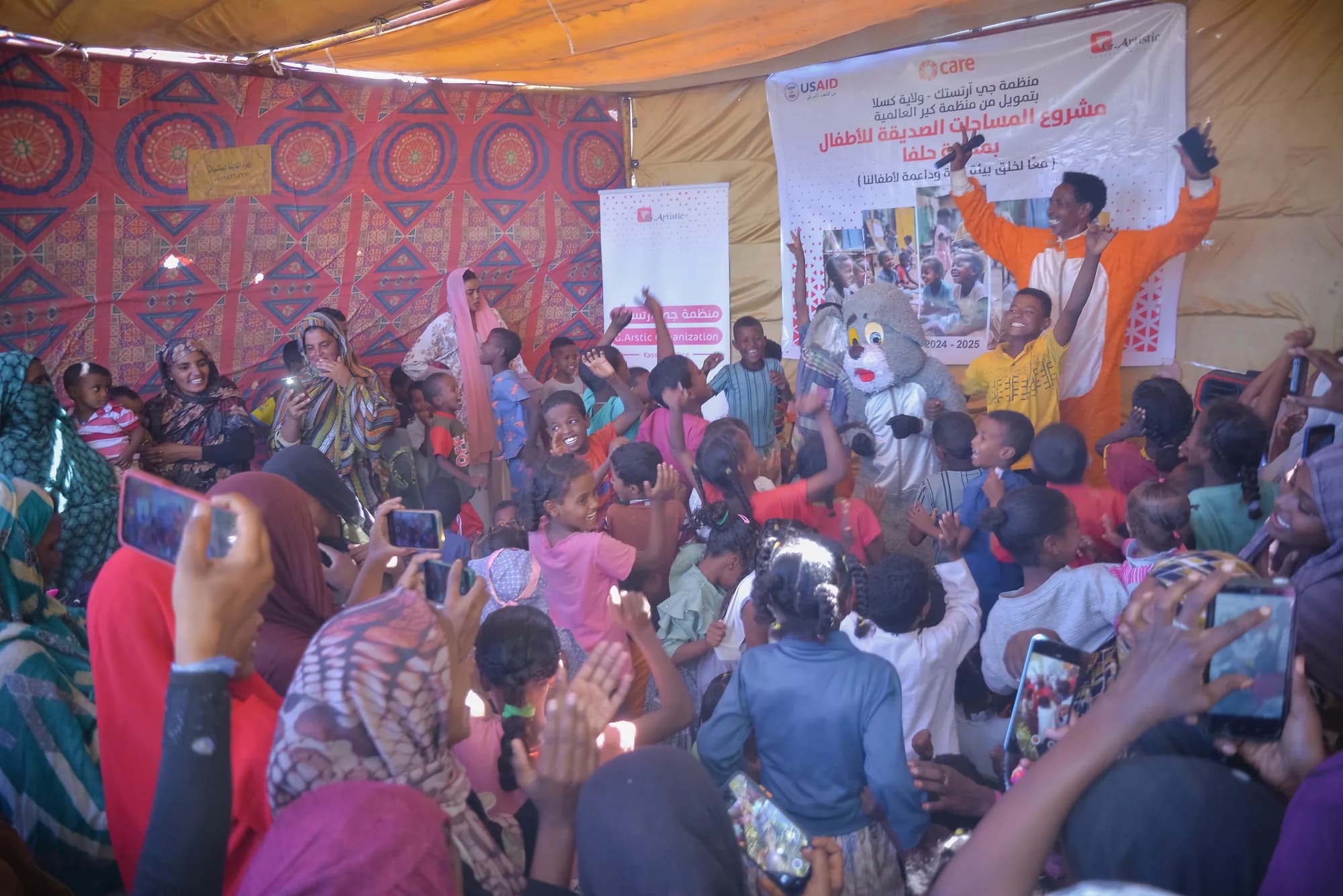
Women, youth, and persons with disabilities are planned for on day one, not added at the end. A recent cohort was ninety percent women, and its closing event was anchored by a theatre piece made and performed by the local deaf community.
Documentation as standard
Attendance lists, photographs with consent, narrative reports, financial records. All produced as part of the work, not assembled afterwards for a donor file. Every project we've delivered since 2022 has been independently audited.
Sequenced delivery
Dialogue, capacity, equipment, ownership. In that order, every time.
Not improvised
None of this is invented from scratch. Using theatre to surface and resolve conflict has a name and a literature: arts-based peacebuilding, and forum theatre within it. The psychosocial side of our work (the trauma-support sessions, the celebrations, the safe creative spaces) maps onto the community-based mental health and psychosocial support that the IASC, IOM, and UNHCR set as standard in displacement settings: the layer that strengthens community and family support so people can protect their own wellbeing. We didn't read that in a manual and copy it. We arrived at it in the field over seven years, and it happens to line up with what the evidence says works: a safe and trusting space, cultural relevance, real community ownership, and facilitators the community already trusts.
We report what didn't work
A project that only reports its successes isn't reporting honestly. So our final reports carry the shortfalls next to the wins. In Al Jabarab, seven of the nine women we trained told us they hadn't gained much in financial management, the budgeting and bookkeeping a community-run fund actually needs. We wrote it into the report and recommended the funder extend that module. We'd rather be useful than impressive.